Columnsコラム · Oct 21, 20262026/10/21
Topsun (1997) — all 150 cards: how much more are no-number and blue-back cards worth?トップサン(1997)全150種リスト。番号なし・青裏・緑裏で値段は何倍違う?
こんにちは、旧裏マークなしです。
10月6日、1996年のカードダスのリザードン(PSA10)が、$100,100(約1,582万円)で落札されました。1枚20円の自販機カードです。
なぜカードダスがここまで来たのか。私は、初版マークなしの1か月前に出ていた、という一点が大きいと思っています。ポケモンカードの、最初の最初。これより前はない、という物語です。
値上がりするカードを並べてみると、だいたい同じ顔をしています。
- 何かの「最初」であること。初版、第1弾、ルーキー
- 数が増えないこと。プロモや、短い期間だけの販売
- 英語版が存在しないこと
3つ目は見落とされがちです。でも、英語版がないということは、海外のコレクターがそのカードを手に入れるには、日本語版を買うしかないということです。世界中の欲しい人が、日本で刷られた分だけを取り合うことになります。
私は、これから世界で値段が上がる余地が一番大きいのは、このジャンルだと思っています。日本語版にしかないポケモンカードの第1回は、トップサンです。
トップサンってなに?
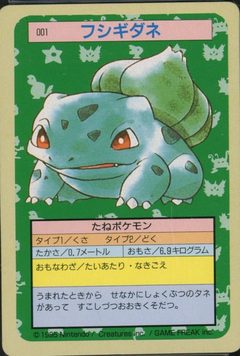
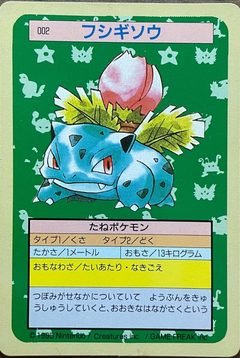
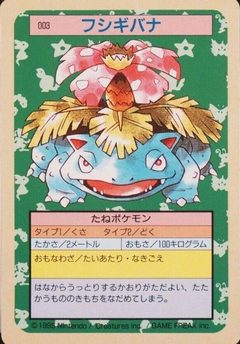
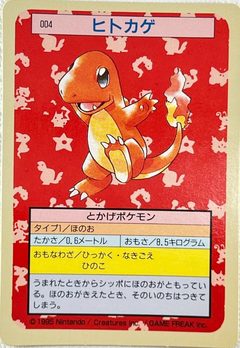
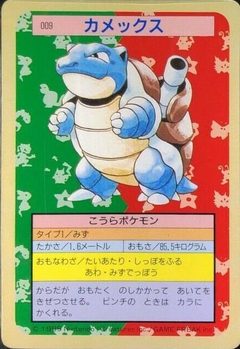
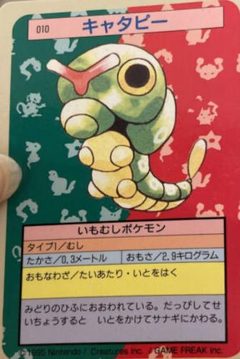
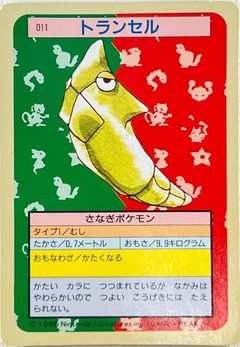
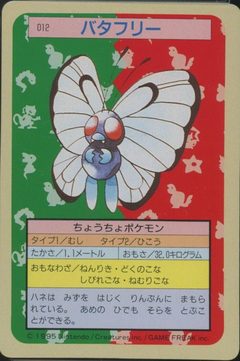
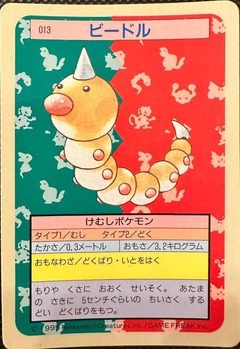
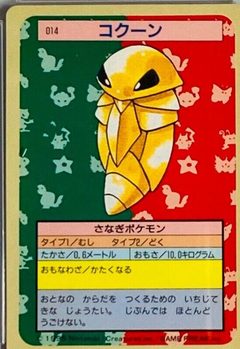
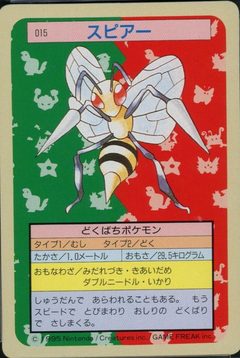
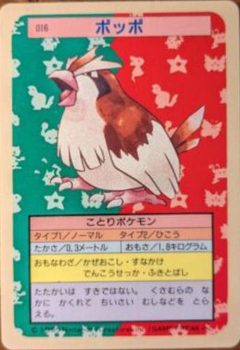
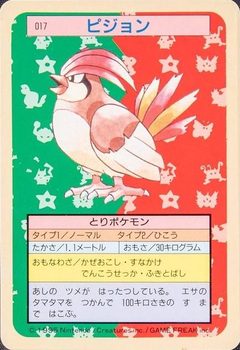
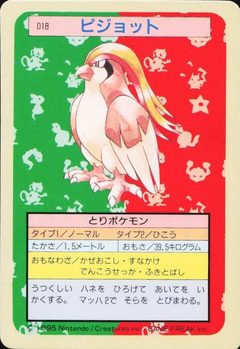
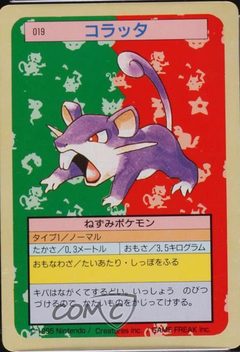
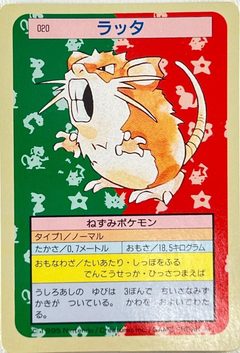
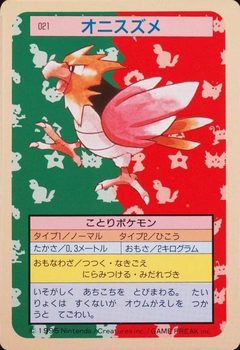
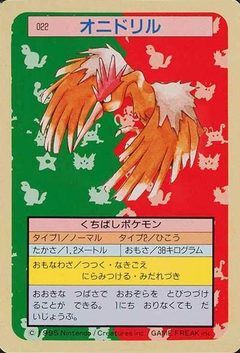
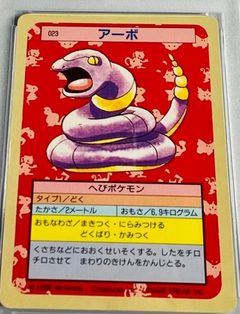
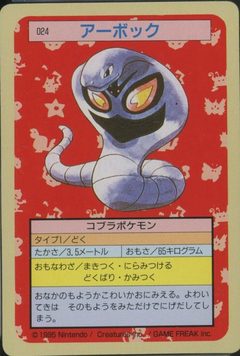
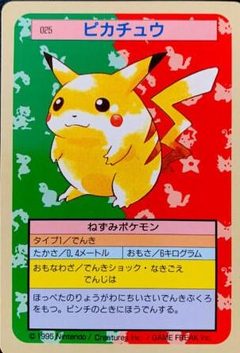
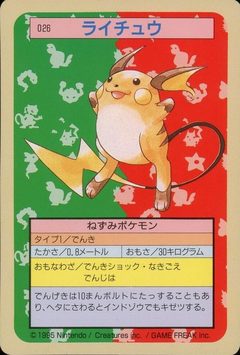
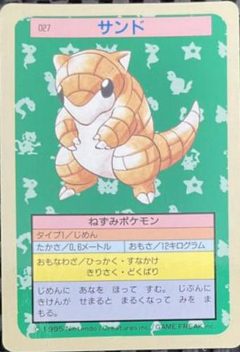
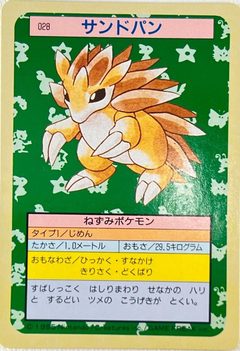
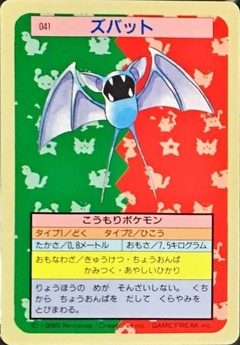
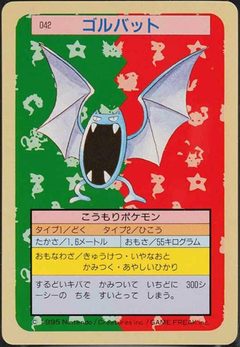
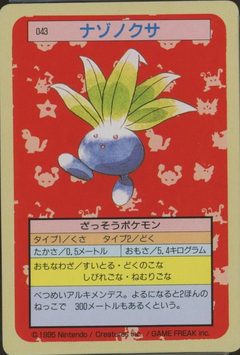
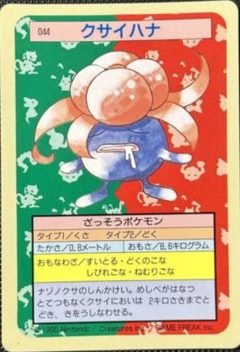
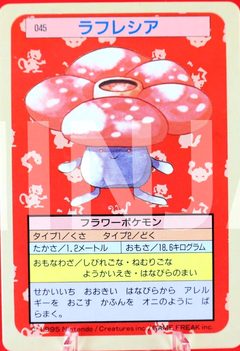
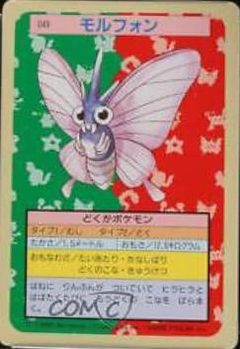
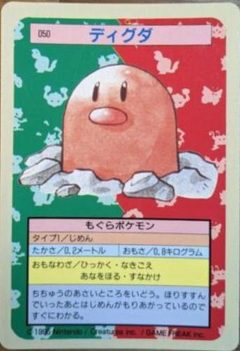
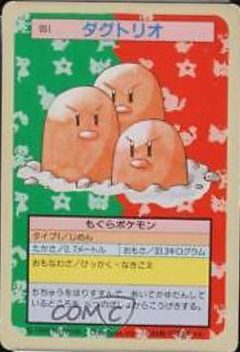
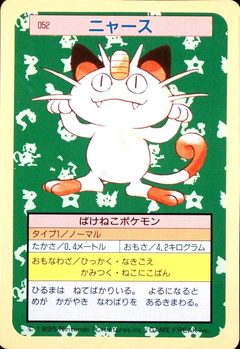
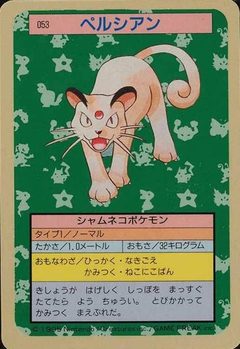
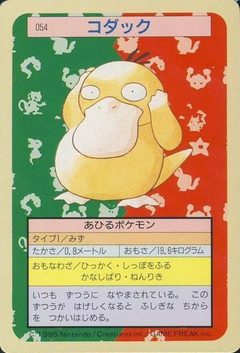
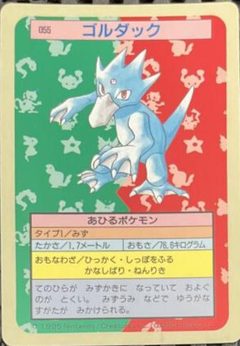
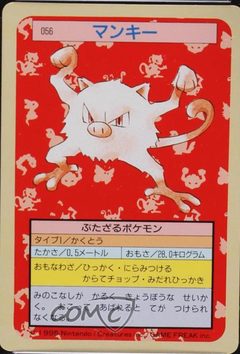
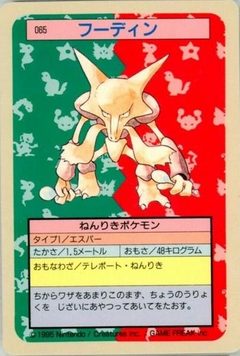
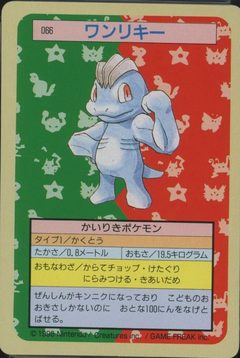
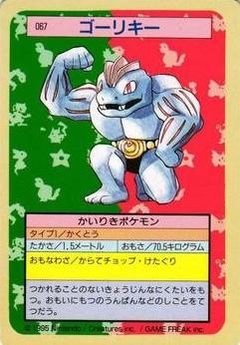
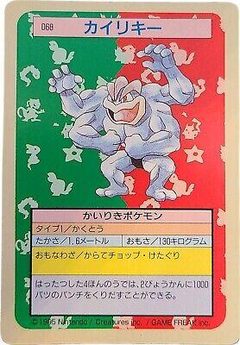
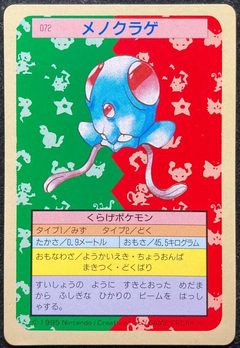
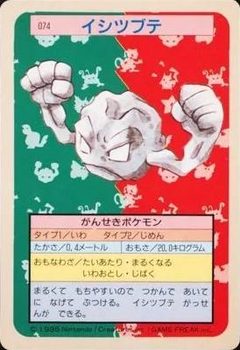
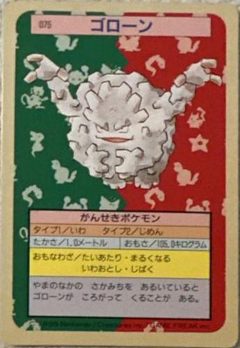
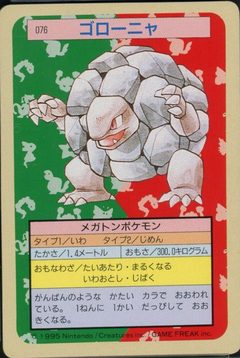
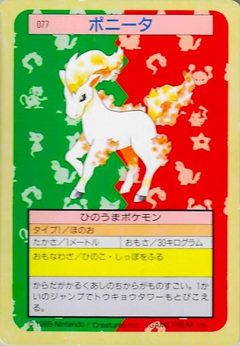
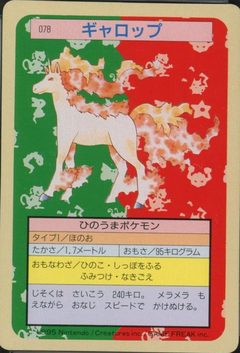
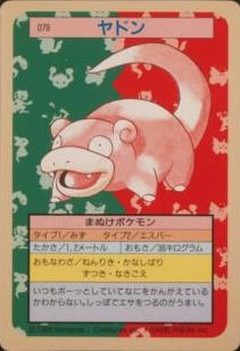
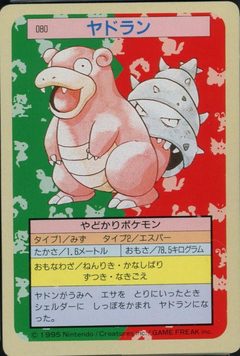
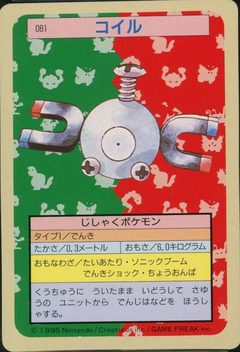
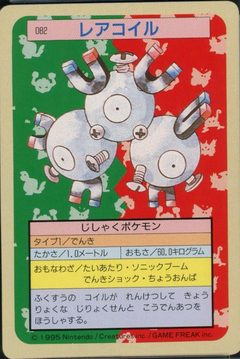
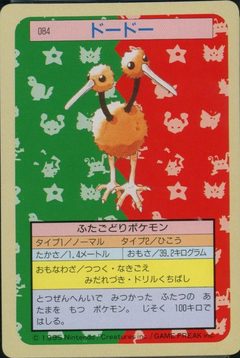
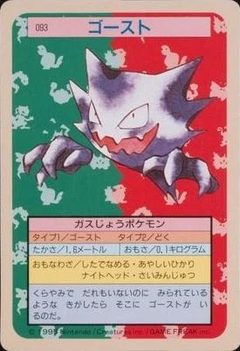
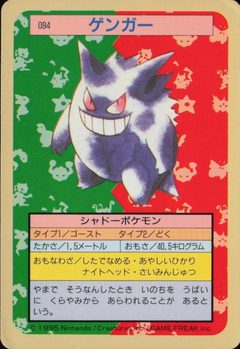
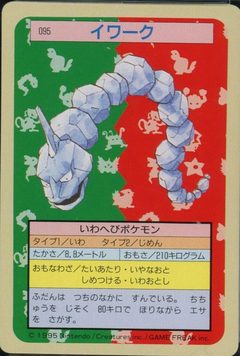
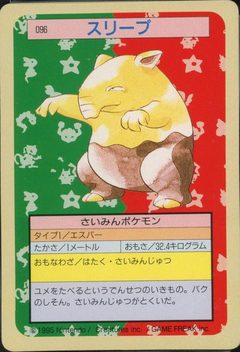
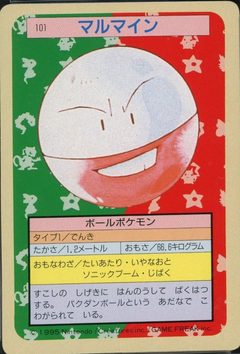
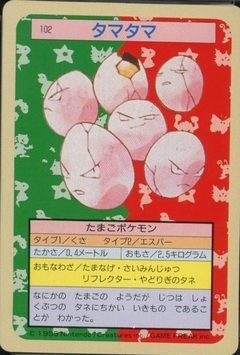
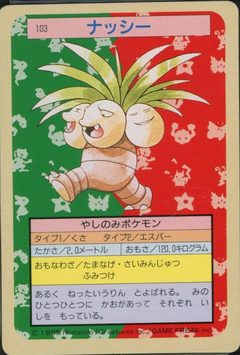
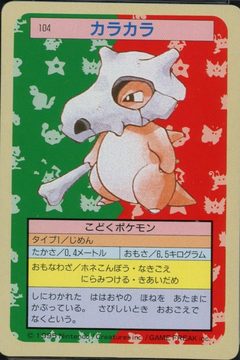
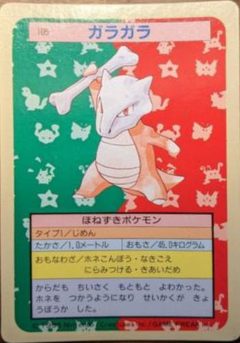
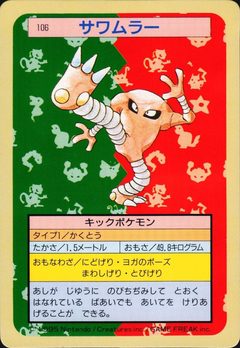
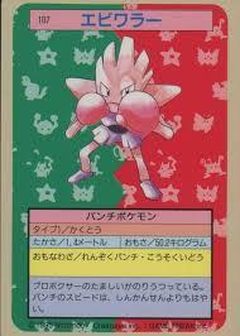
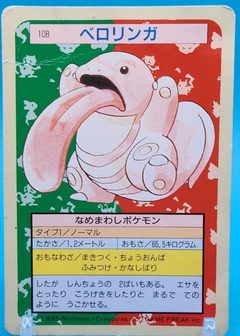
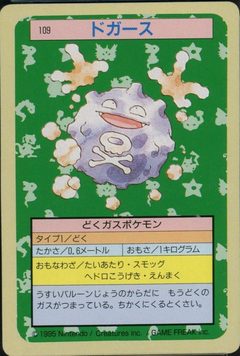
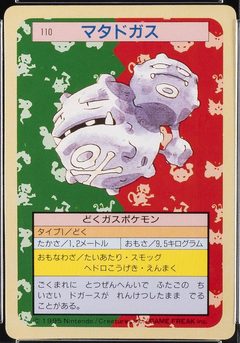
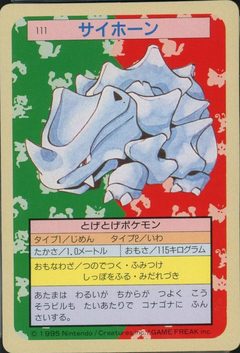
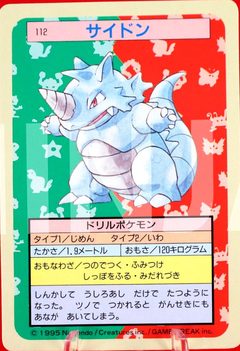
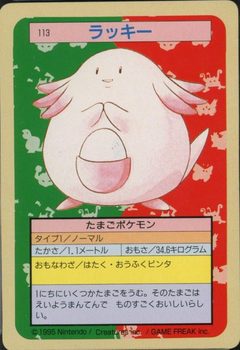
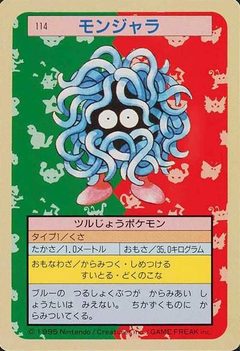
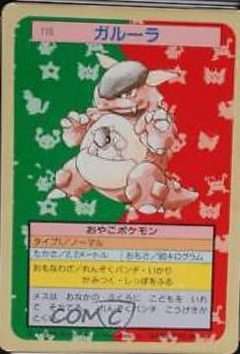
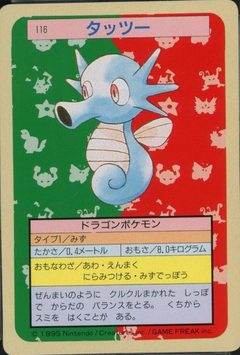
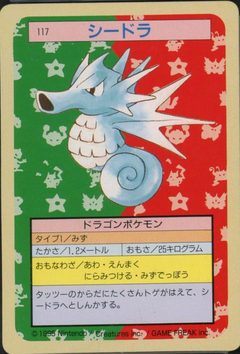
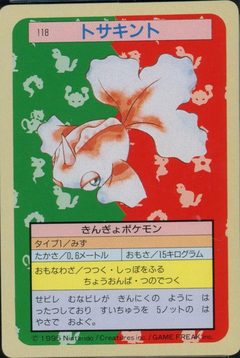
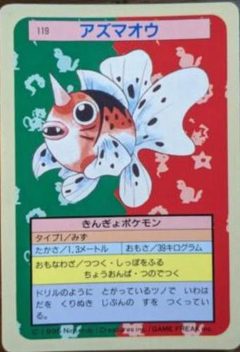
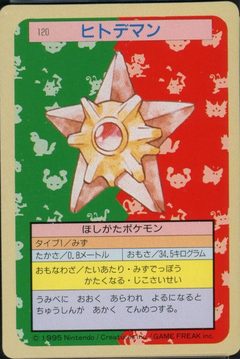
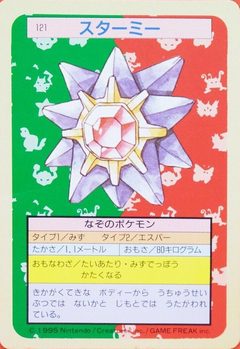
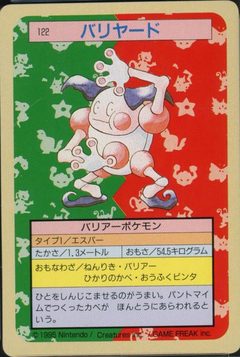
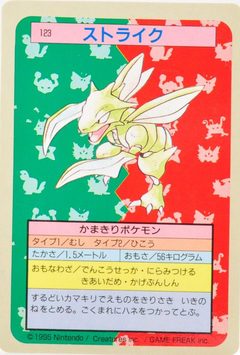
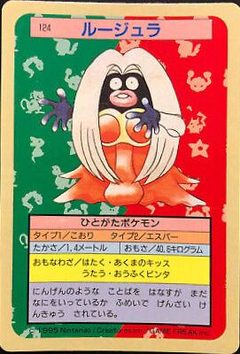
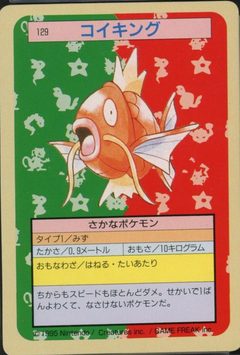
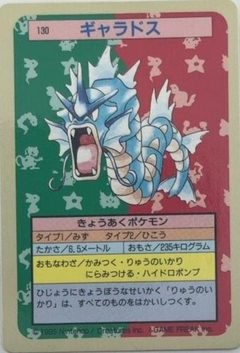
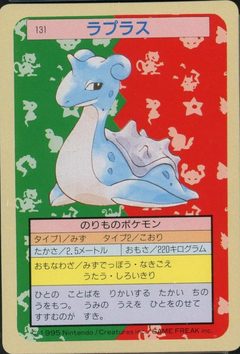
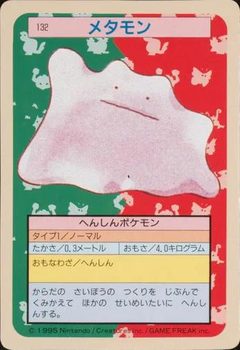
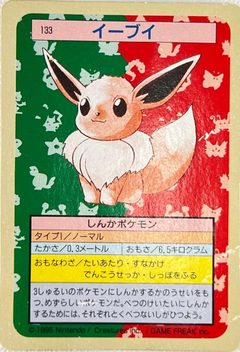
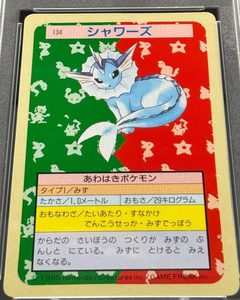
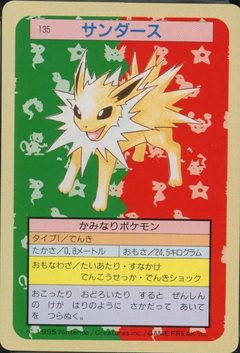
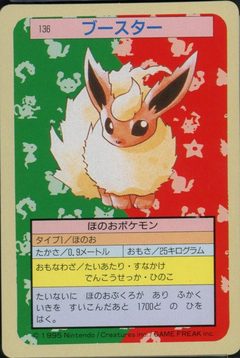
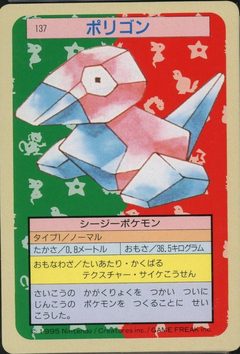
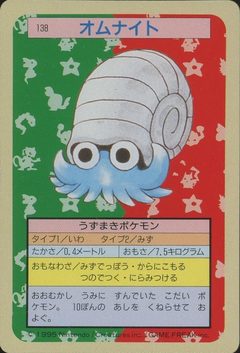
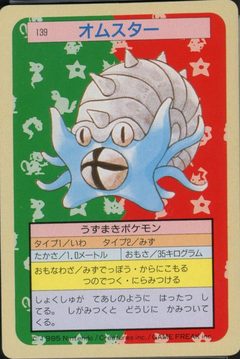
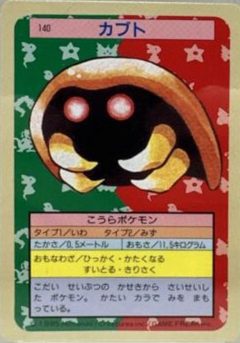
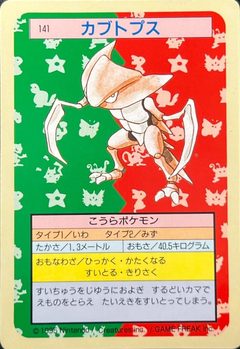
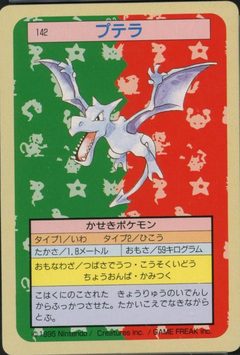
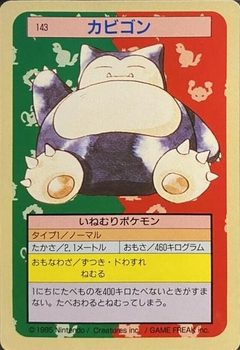
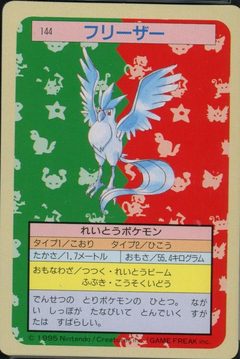
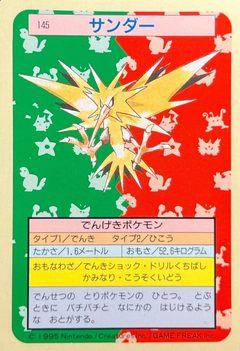
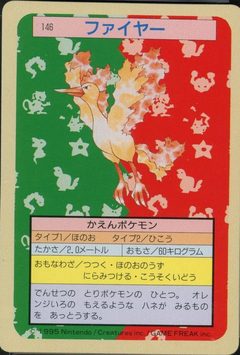
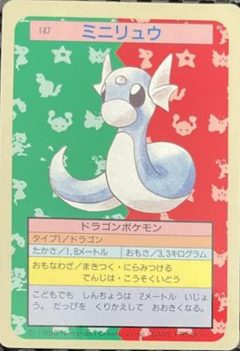
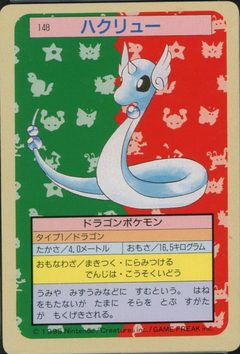
トップ製菓(トップサン)のガムのおまけについていたカードです。発売は1997年。パッケージには「ポケモンカードガム」「アップル味」「キャラクターカード2枚入り」と書いてあります。
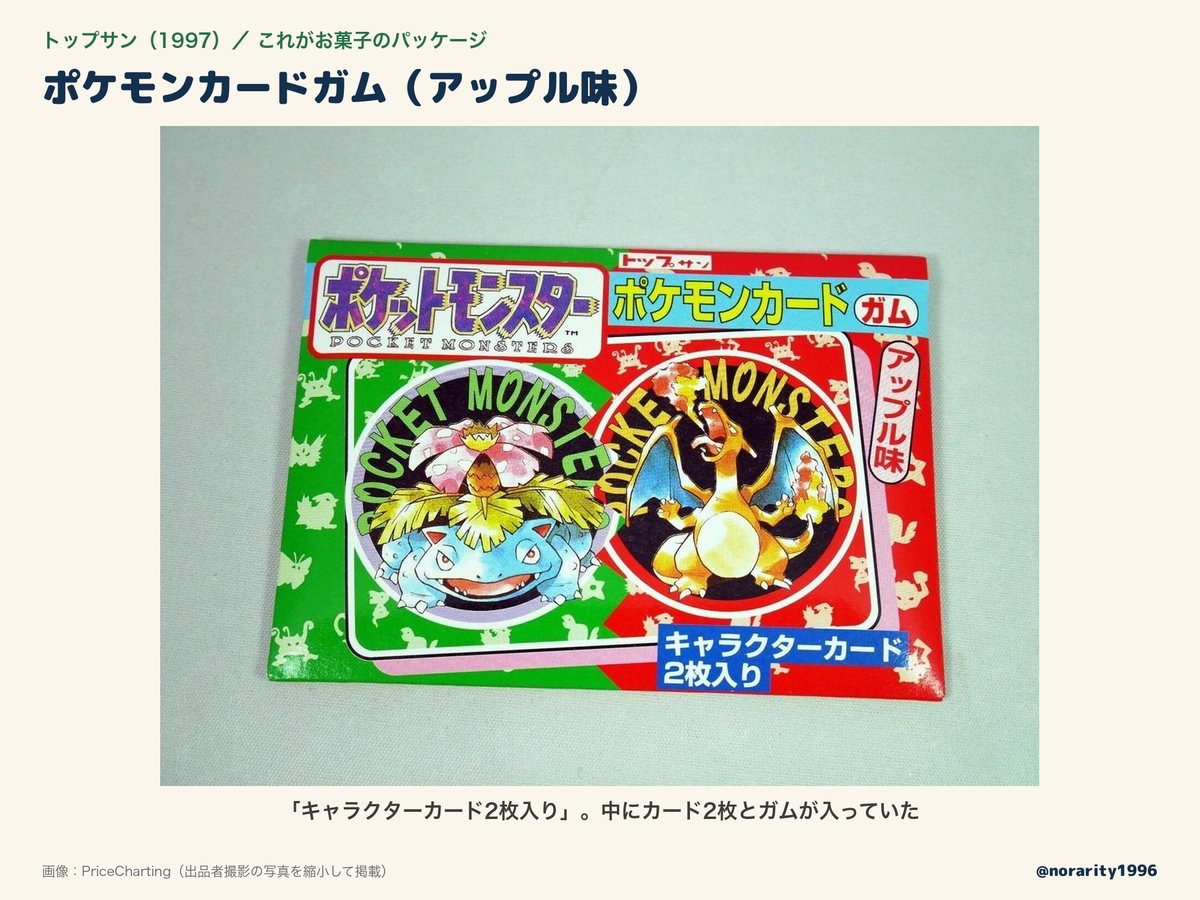
カードの下には「1995」と書いてありますが、これはポケモンという作品の版権の年で、カードが出た年ではありません。トップ製菓がポケモンのライセンスを受けたのは1997年。PSAも長いあいだ「1995」とラベルに書いていましたが、2024年3月に「1997」へ直しています。
ちなみに「トップサンが最初のポケモンカード」という話を見かけますが、これは違います。最初はカードダス(1996年9月)です。
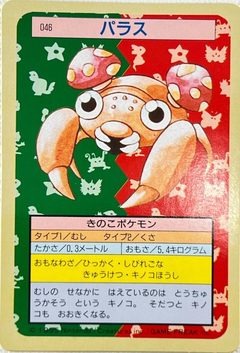
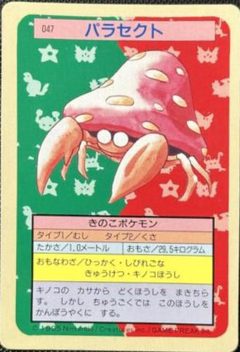
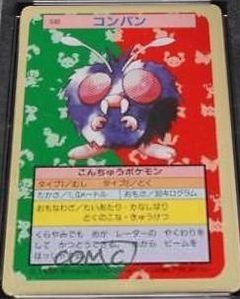
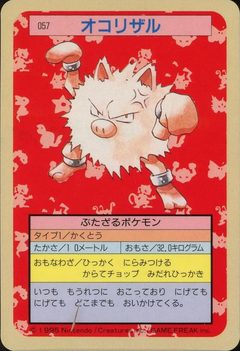
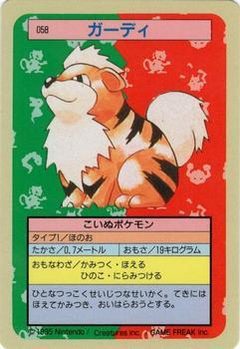
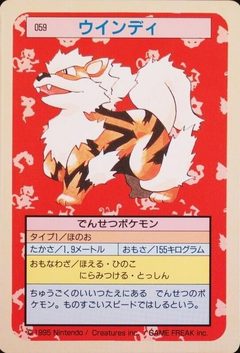
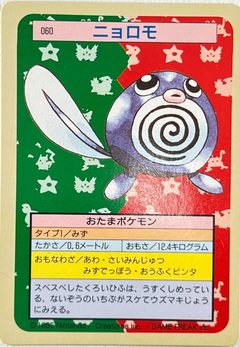
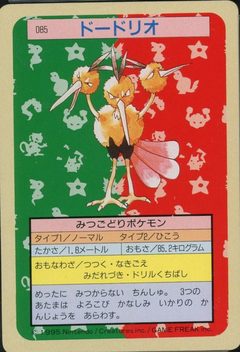
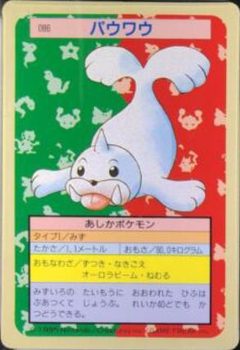
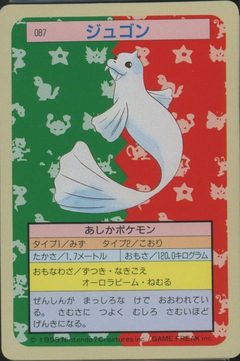
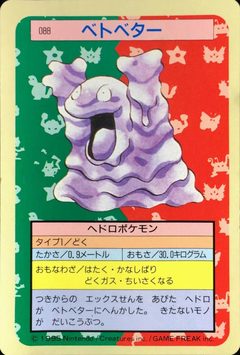
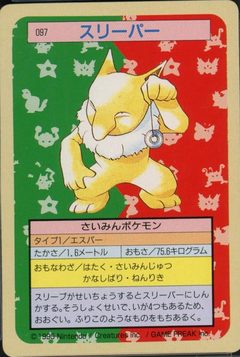
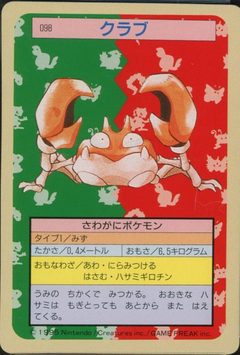
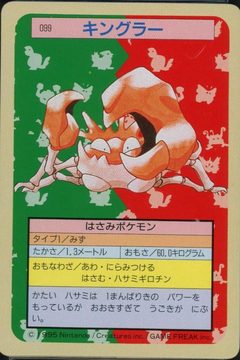
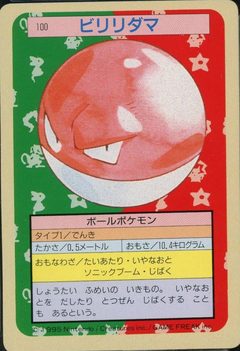
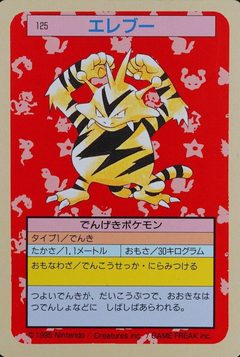
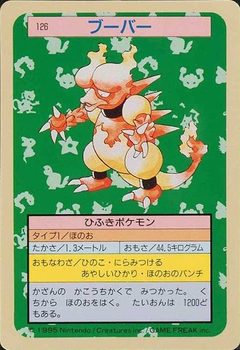
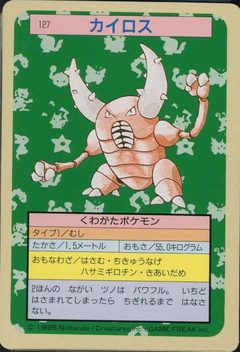
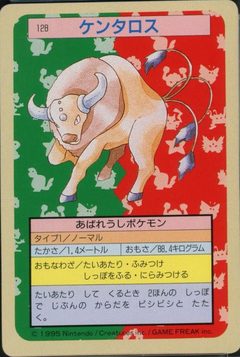
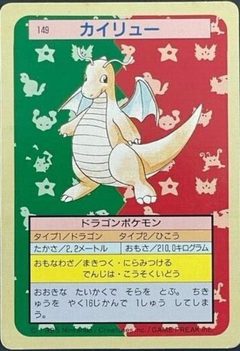
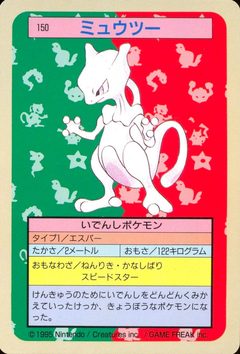
カードは150種。ミュウはいません。それにキラのプリズムが16種あります。そして、このトップサンには、同じカードに3つの顔があります。
(2匹のポケモンが戦う絵柄の「トップサンVS」は、別のシリーズです。トップサンVS 全172種リストにまとめています。)
同じカードに3つの顔
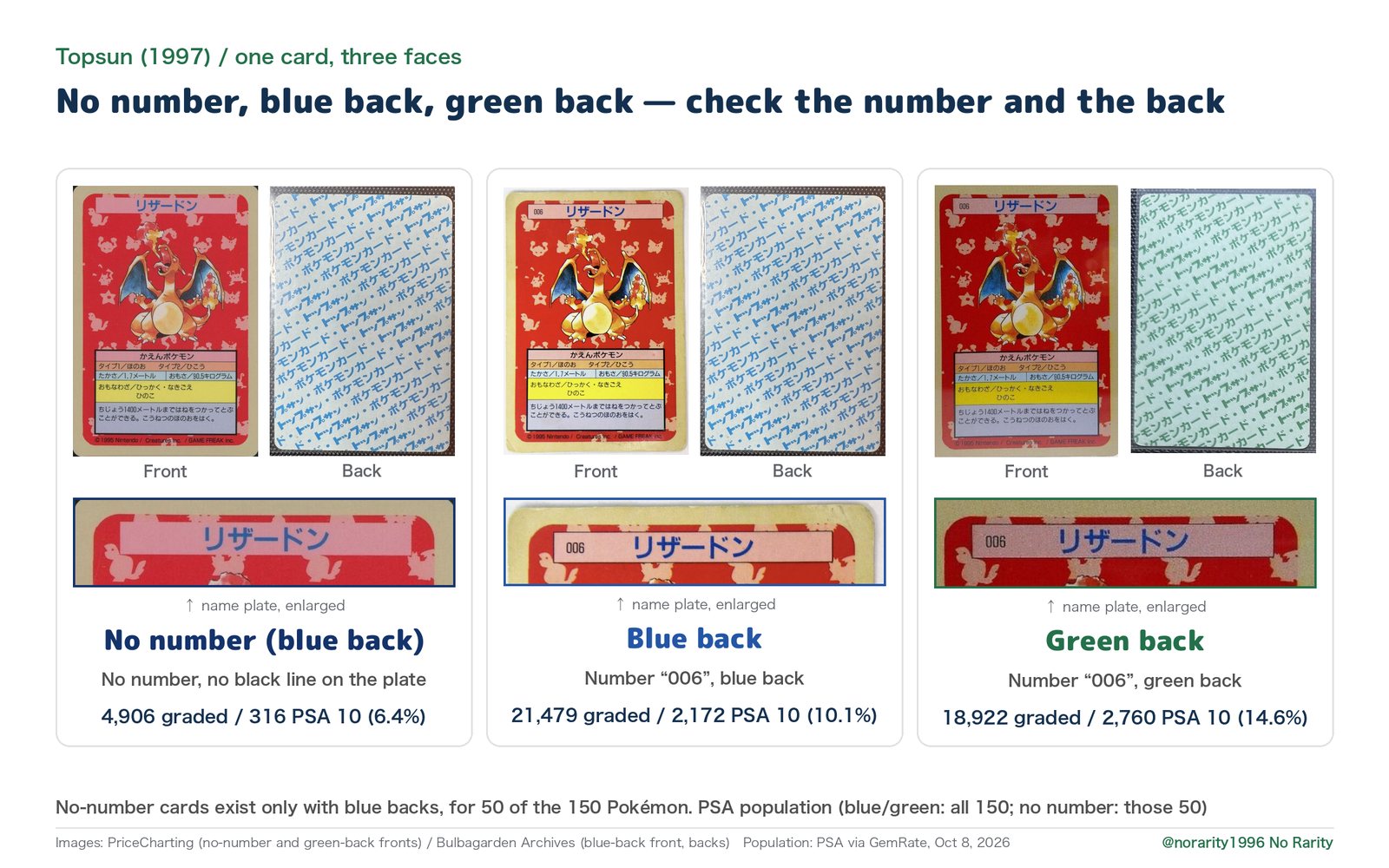
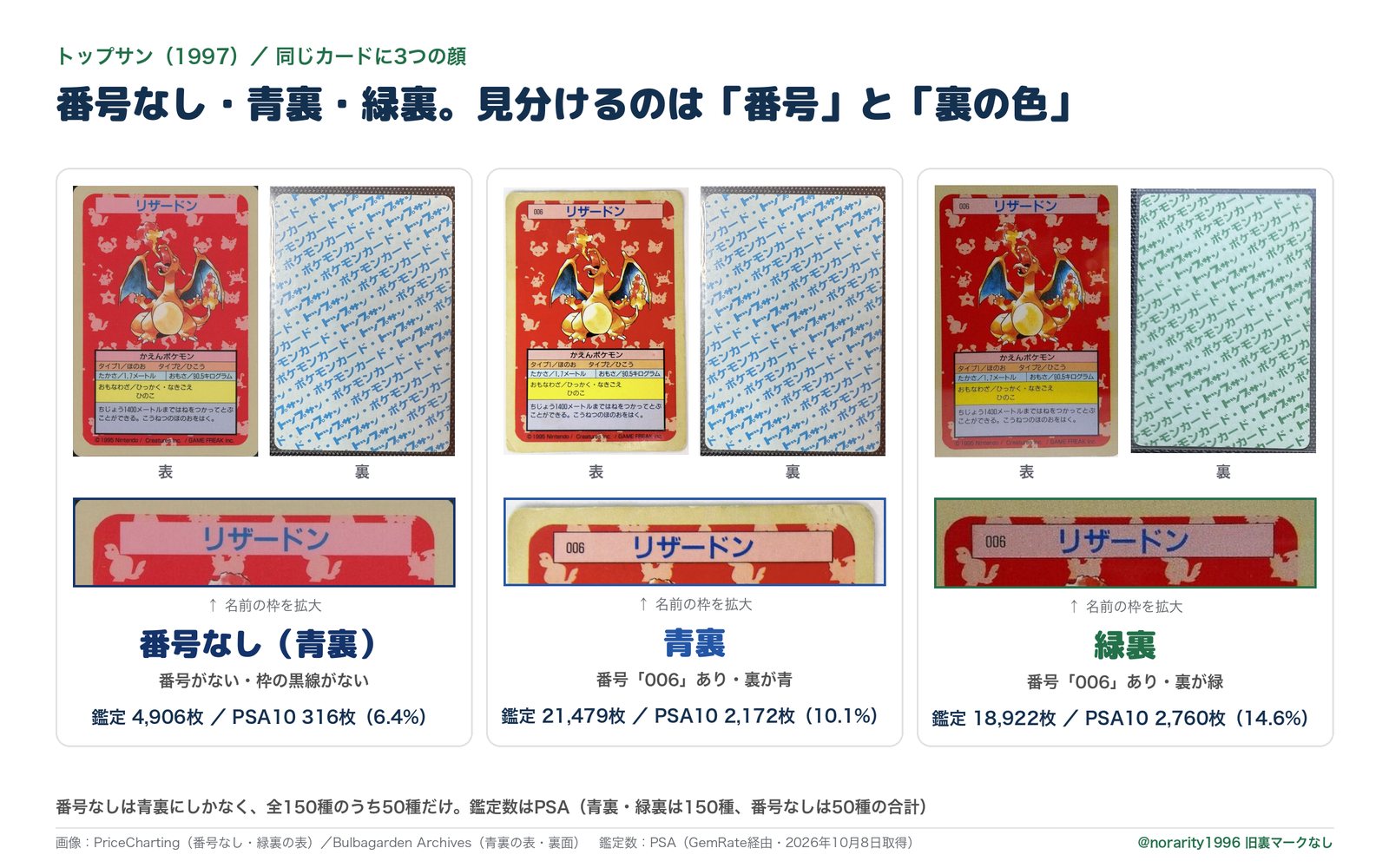
見分けるのは「番号」と「裏の色」だけです。
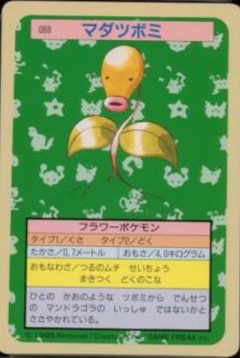
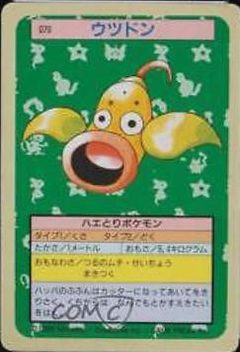
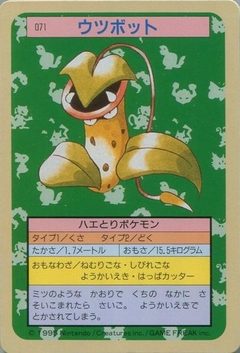
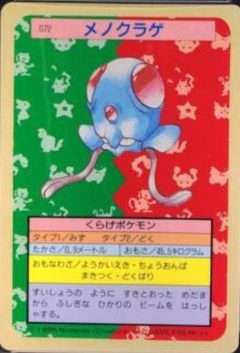
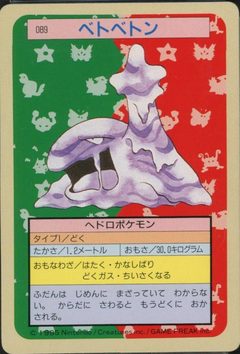
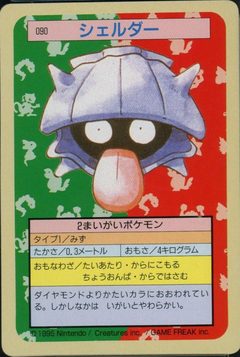
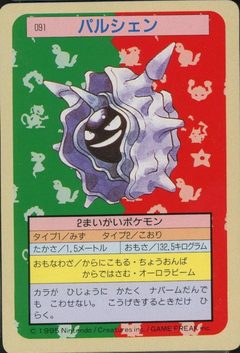
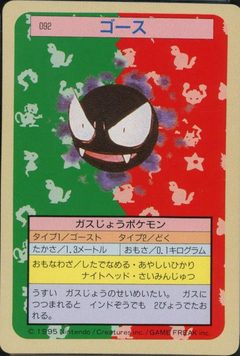
- 番号なし:名前の横に図鑑番号がなく、名前の枠の黒い線もない。裏は青
- 青裏:番号あり、裏が青
- 緑裏:番号あり、裏が緑
番号なしは、全150種のうち50種だけ。しかも青裏にしかありません。最初に刷られた分で、すぐに番号が足された、という説があります。
青裏が先、緑裏が後、というのが通説です(逆だという声もあります)。そして、古いものほどPSA10の割合が低い。PSA10の割合は、番号なしが6.4%、青裏が10.1%、緑裏が14.6%でした。
値段は、ほぼ「数」どおりについている
では、3つの顔で値段はどれくらい違うのか。eBayで7月10日から10月8日までに売れたトップサンのPSA鑑定品、1,211件を仕分けてみました。ポケモンによって値段が全然違うので、「同じポケモン同士」で比べています。
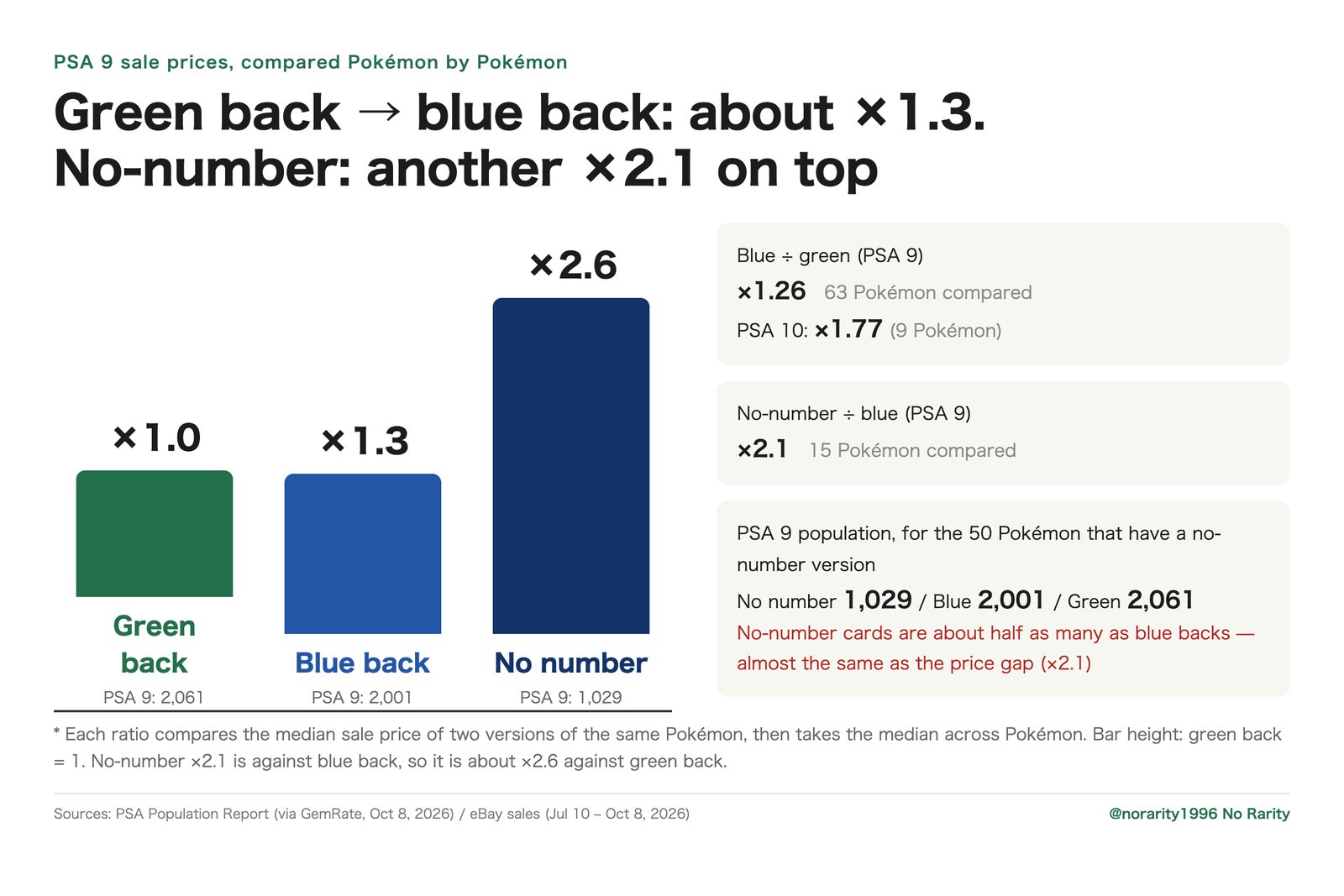
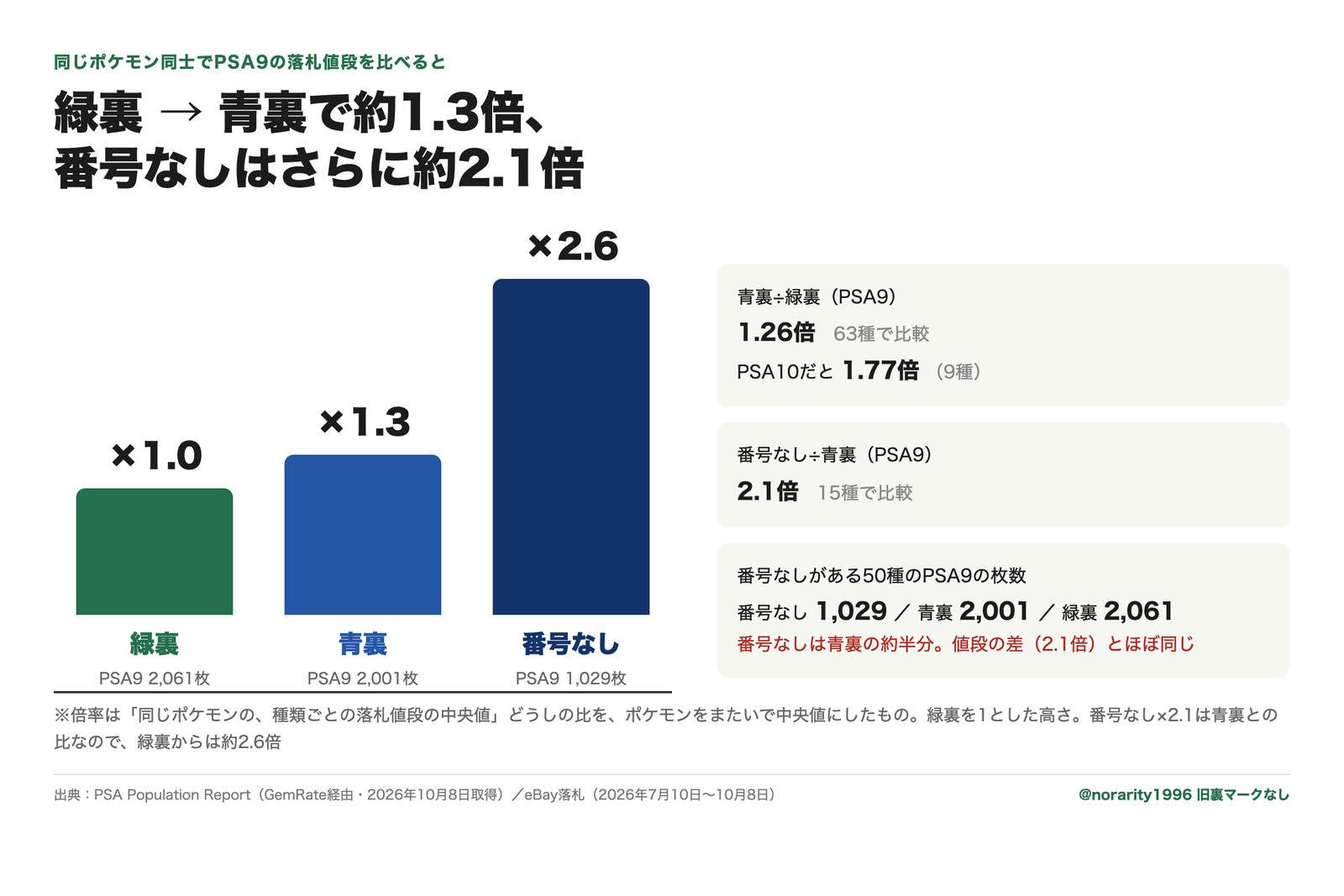
PSA9で比べると、緑裏から青裏で約1.3倍。番号なしは、そこからさらに約2.1倍。緑裏から見ると約2.6倍です。
面白いのは、番号なしの「2.1倍」が、数の差とほぼ同じことです。番号なしがある50種で数えると、PSA9は番号なし1,029枚、青裏2,001枚。番号なしは、ちょうど半分しかありません。つまり、番号なしだから特別に高いのではなく、数どおりの値段がついている。私はそう読みました。
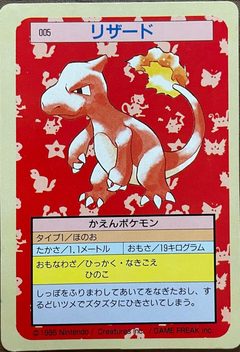
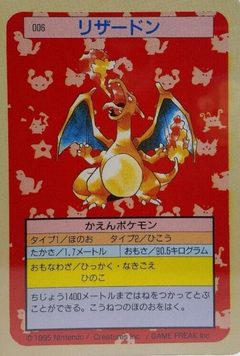
リザードンで見ると、こうです。
- 緑裏 PSA9:中央値 約31万円(8件)
- 青裏 PSA9:中央値 約37万円(4件)
- 番号なし PSA9:約125万円(7月12日のオークション、1件)
ただ、10月7日には、同じ出品者のリザードンPSA9が、青裏98万円、緑裏96万円とほぼ同じ値段でオークション落札されています。青裏と緑裏の差は、思っているより小さいのかもしれません。
10月、トップサンも動き始めた
カードダスが大暴騰した10月、トップサンも静かではありませんでした。
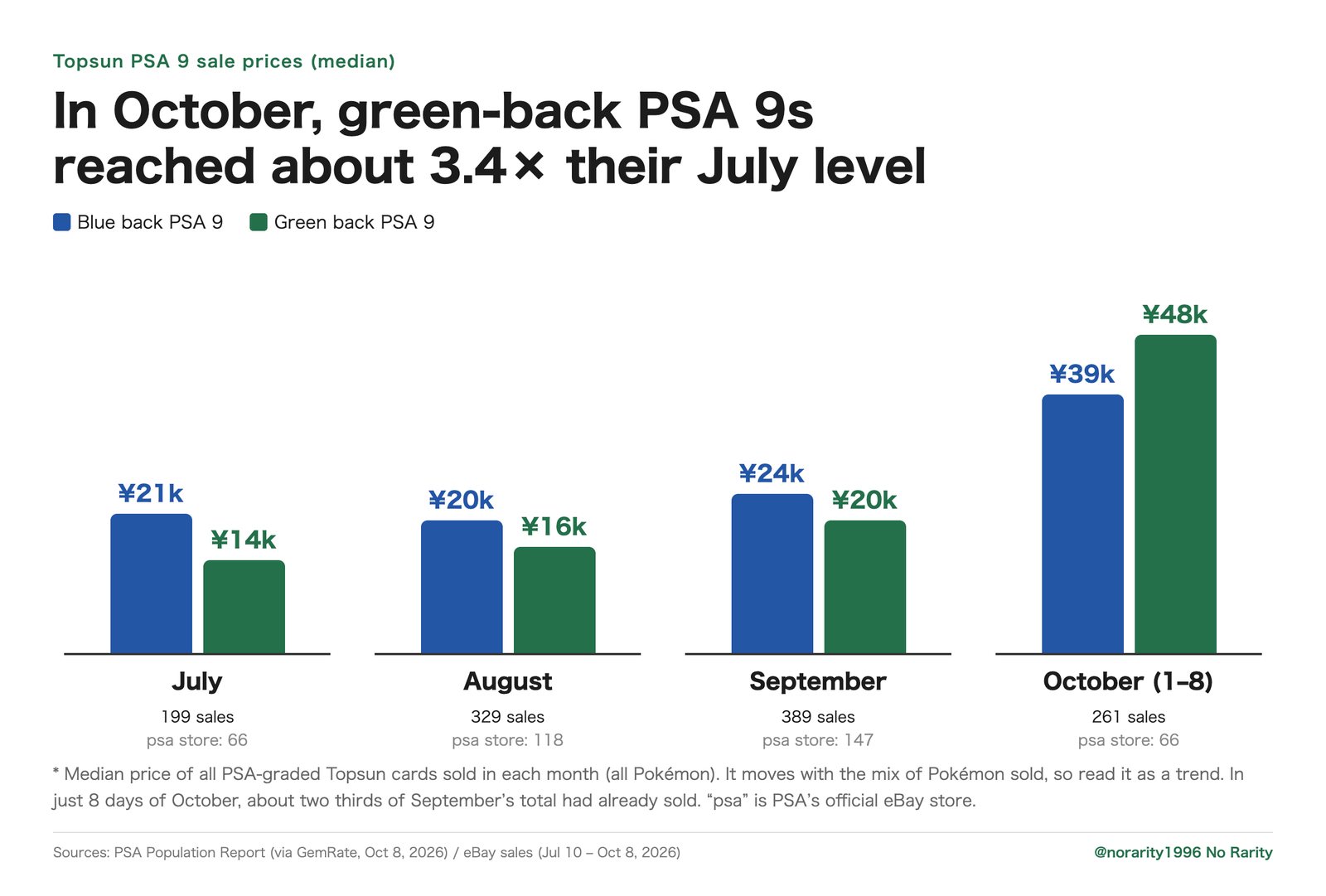
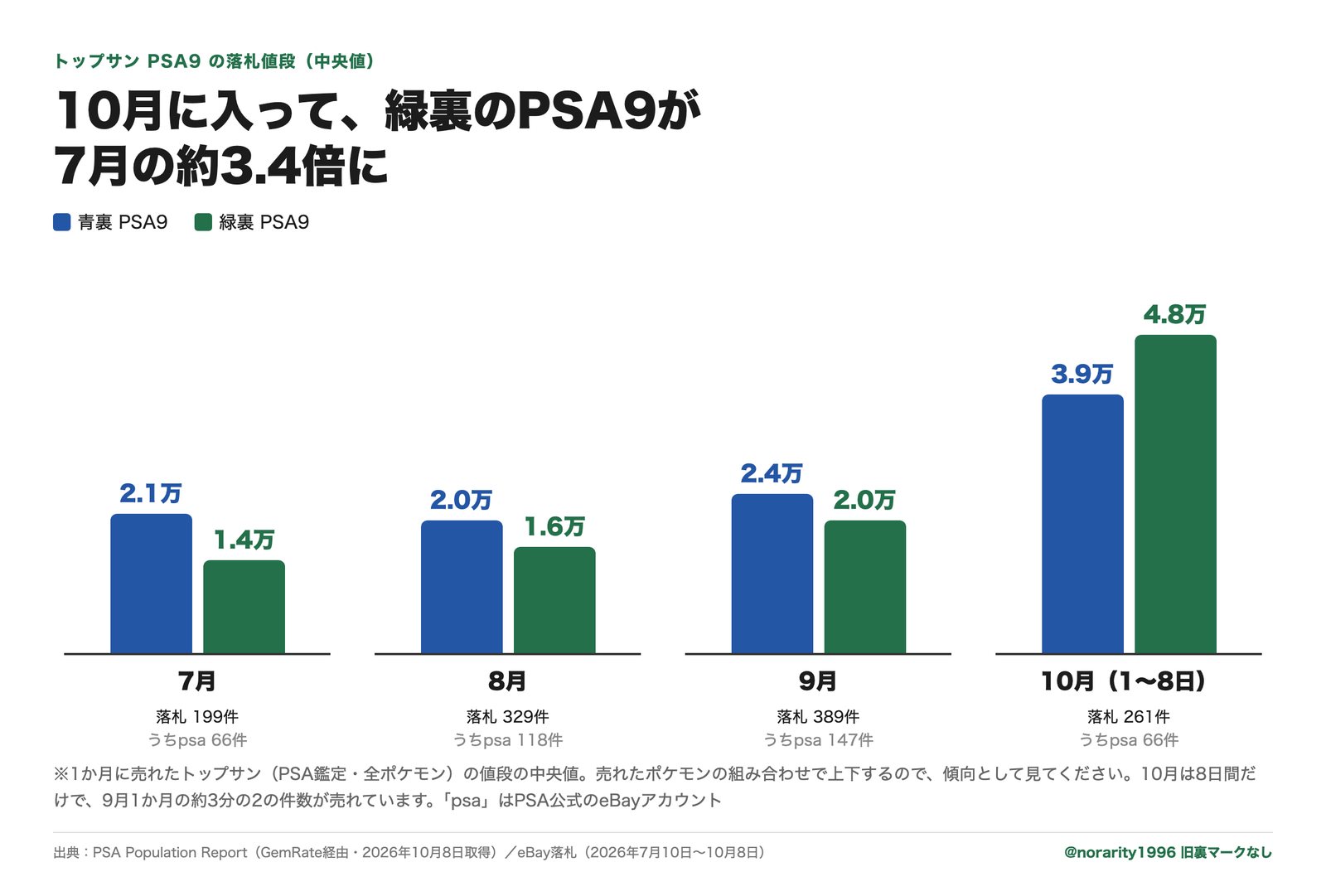
PSA9の値段の中央値は、7月は青裏2.1万円、緑裏1.4万円。それが10月(1〜8日)は青裏3.9万円、緑裏4.8万円です。売れた件数も、10月は8日間だけで261件。9月1か月(389件)の3分の2に、もう届いています。
ただし、売れたトップサンの3分の1(397件)は、PSA公式のeBayアカウント「psa」の出品でした。頭に入れておいてください。
プリズム3種のPSA10は、ほぼ存在しない
キラのプリズムは16種。模様が、ブロック、クラックアイス、チェッカーの3種類あります。
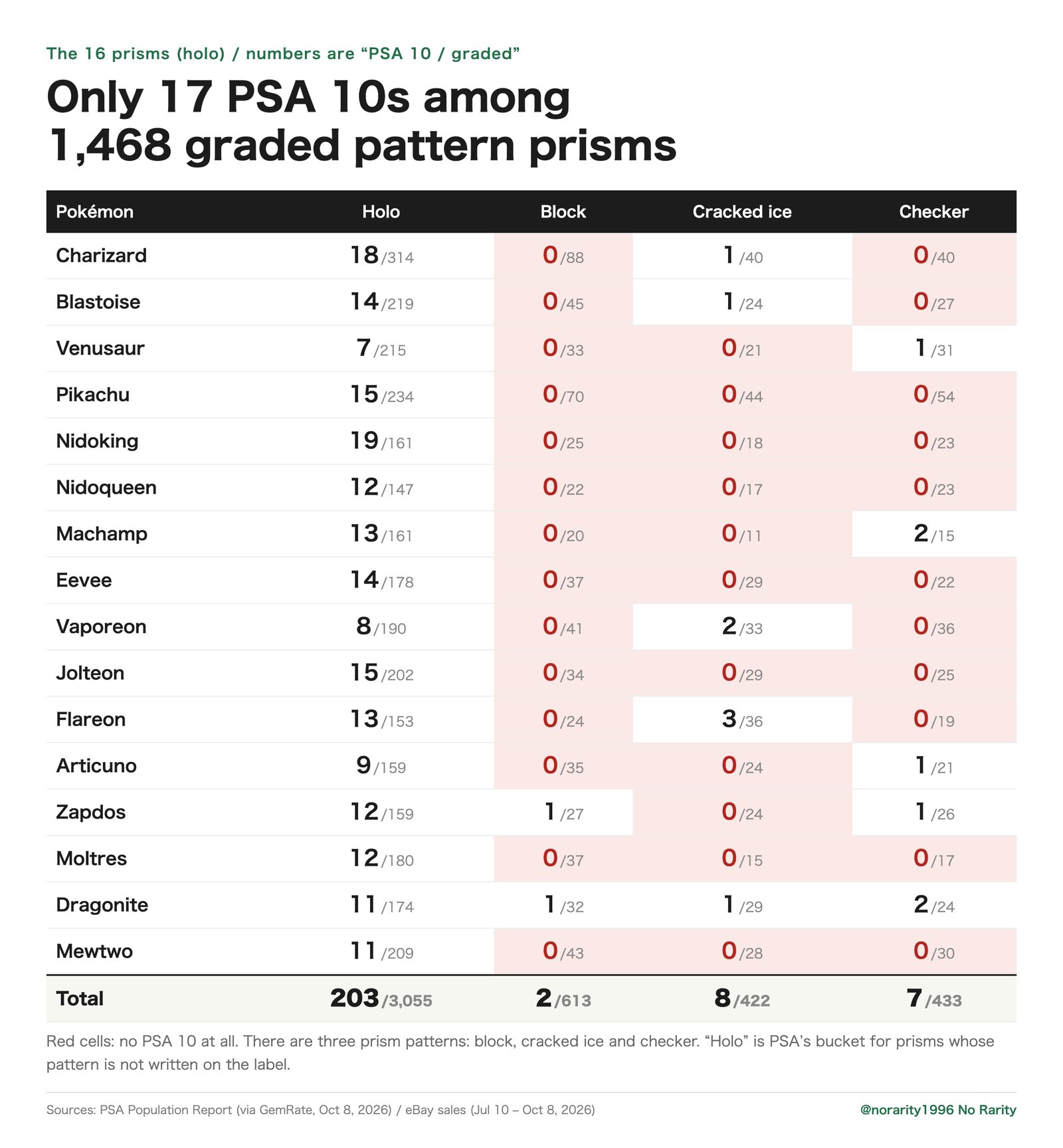
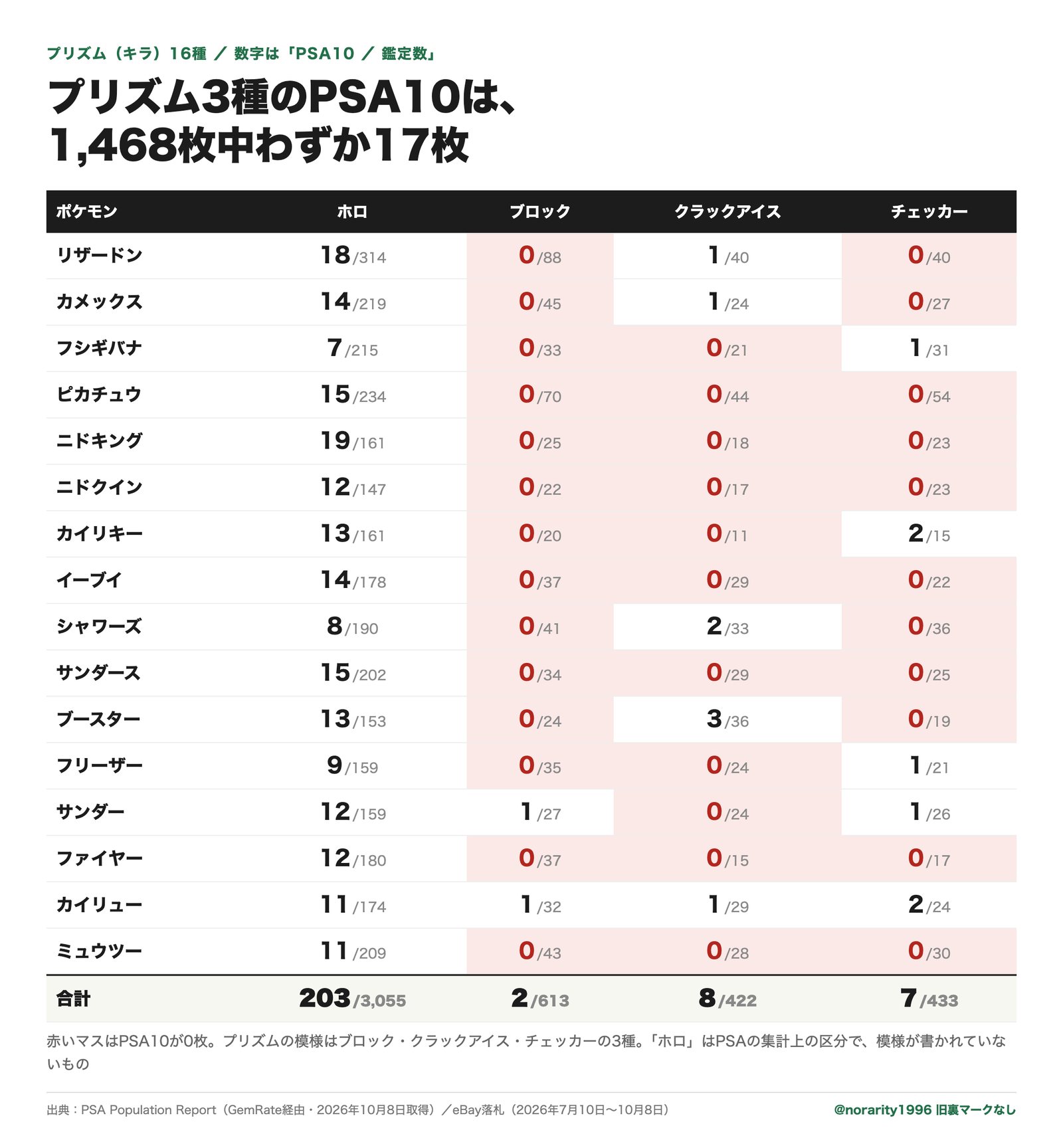
この3種、PSAで鑑定された1,468枚のうち、PSA10はたった17枚です。ピカチュウとミュウツーは、3種類どれもPSA10が0枚。リザードンも、ブロックとチェッカーは0枚でした。
豆知識
- ミュウがいない(後のシリーズで、プリズムとして登場する)
- 背景は赤と緑のジグザグが基本。でも、赤一色・緑一色のカードもある
- サイズは約58.7×85.7mm。ポケモンカードより一回り小さい。ポケモンカードと同じ大きさなら、偽物を疑ったほうがいい
- 番号なしの偽物は、名前の枠の黒い線で見分けられる。本物の番号なしには線がない
- 「トップサン」の名前がつくのは最初のシリーズだけ。2弾以降はロゴが「トップ」に変わる
- PSAの鑑定品には、プリズムの模様が書かれていないものもある(プリズムの表の「ホロ」)
正直に書いておく注意点
- 値段はeBayだけです。国内(ヤフオク・メルカリ)の値段は入っていません
- 番号なし・青裏・緑裏の区別は、出品タイトルから判定しています。タイトルに書いていない番号なしは、青裏に混ざっています
- 1件しか売れていないカードもあります。1件の値段は、たまたまの値段かもしれません
- 売れたトップサンの3分の1は、PSA公式アカウントの出品です
- 鑑定数はPSAだけです
私はどうするか
私が探すなら、番号なしです。それも、人気のないポケモンのPSA9。
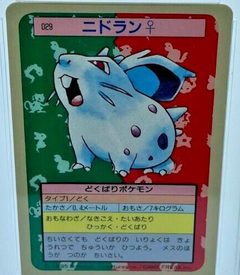
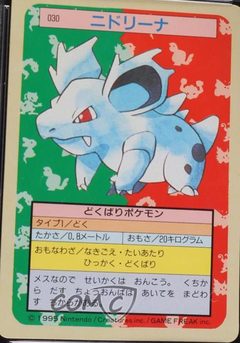
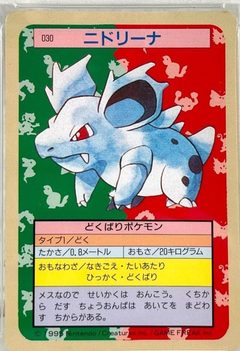
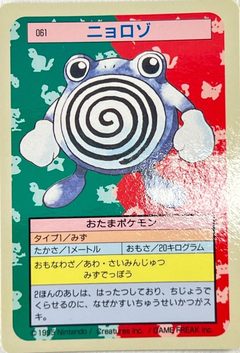
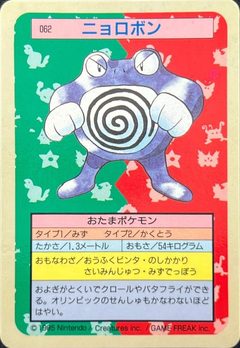
番号なしは全150種のうち50種だけ。PSA9の数は、同じポケモンの青裏の半分しかありません。それなのに、ニドリーノやニョロモの番号なしPSA9は、この3か月、1〜2万円台で売れていました。
10月に入って、青裏と緑裏のPSA9は2〜3倍になりました。でも番号なしのPSA9は、10月はまだ1枚も売れていません。急騰のあとの値段が、まだついていないんです。
リザードンやピカチュウの番号なしは、もう100万円を超えています。狙うなら、その下。英語版がない、数が増えない、そして最初に刷られたと言われる分。条件はそろっていると思っています。
ただし、気をつけることが3つあります。
- 偽物が多い。本物の番号なしは、名前の枠に細い黒い線がありません。買う前に必ず写真で確かめてください
- PSA10はまず出ない。番号なしのPSA10の割合は6.4%で、3つの中で一番低い。素体を買って鑑定に出すなら、PSA9が取れれば上出来くらいに考えたほうがいいです
- 数字はまだ少ない。番号なしのPSA9が売れたのは、この3か月で20件ほど。1件の値段で、印象は大きく変わります
※投資の助言ではありません。カードの値段は上がることも下がることもあります。
Hi, I'm No Rarity, a collector in Japan.
On October 6, a 1996 Carddass Charizard (PSA 10) sold for $100,100. It is a vending-machine card that cost ¥20.
Why did Carddass get this far? I think one fact matters most: it came out a month before the first Pokémon TCG set (No Rarity). It is the very first Pokémon card. There is nothing before it.
When I line up the cards that keep rising, they tend to share the same traits:
- They are the “first” of something — first edition, first set, rookie.
- Their supply can't grow — promos, or cards sold only for a short time.
- There is no English version.
The third one is easy to overlook. But if there is no English version, a collector outside Japan has only one way to get the card: buy the Japanese one. Everyone in the world who wants it competes for whatever was printed in Japan.
I think this is the category with the most room to rise. The first Japan-only card in this series is Topsun.
What is Topsun?
Topsun cards came with chewing gum from Top Seika (Topsun), released in 1997. The wrapper says “Pokémon Card Gum”, “apple flavour” and “2 character cards inside”.
The cards say “1995” at the bottom, but that is the copyright year of Pokémon itself, not the year the cards came out. Top Seika got the Pokémon licence in 1997. PSA printed “1995” on its labels for years, then changed it to “1997” in March 2024.
You will sometimes read that Topsun was the first Pokémon card. It wasn't. The first was Carddass (September 1996).
There are 150 cards — no Mew — plus 16 prisms. And each card has three faces.
(Topsun VS, with two Pokémon fighting on each card, is a different set. See Topsun VS — the complete list of 172 cards.)
One card, three faces
Only two things tell them apart: the number and the colour of the back.
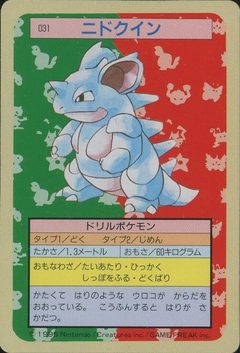
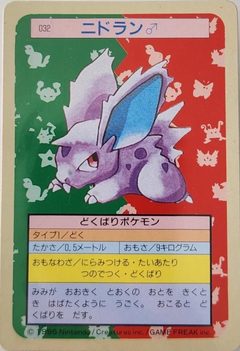
- No number: no Pokédex number next to the name, and no black line around the name plate. Blue back.
- Blue back: number printed, blue back.
- Green back: number printed, green back.
Only 50 of the 150 Pokémon have a no-number version, and only with a blue back. One theory is that these were the first print, and the numbers were added soon after.
The common view is that blue backs came first and green backs later (some say the reverse). The older the version, the lower its PSA 10 rate: 6.4% for no-number, 10.1% for blue back, 14.6% for green back.
Prices follow the numbers
So how far apart are the three faces in price? I sorted 1,211 PSA-graded Topsun cards sold on eBay between July 10 and October 8. Prices vary hugely by Pokémon, so I compared versions of the same Pokémon.
At PSA 9, blue back is about 1.3× green back. No-number is another 2.1× on top of blue back — about 2.6× green back.
What I find interesting is that the 2.1× is almost exactly the supply gap. For the 50 Pokémon that have a no-number version, there are 1,029 no-number PSA 9s and 2,001 blue-back PSA 9s. Exactly half. So no-number cards aren't priced as something special — they are priced by how many exist. That is how I read it.
Charizard looks like this:
- Green back PSA 9: median about ¥310,000 (≈$1,960), 8 sales
- Blue back PSA 9: median about ¥370,000 (≈$2,340), 4 sales
- No number PSA 9: about ¥1.25M (≈$7,900), one auction on July 12
On October 7, though, the same seller's blue-back and green-back Charizard PSA 9s sold at auction for almost the same price — ¥980,000 and ¥960,000. The gap between blue and green may be smaller than people think.
In October, Topsun started moving too
October was the month Carddass exploded, and Topsun didn't stay quiet.
The median PSA 9 was ¥21k for blue back and ¥14k for green back in July. In October (1–8) it was ¥39k and ¥48k. In those 8 days, 261 cards sold — already two thirds of September's 389.
Keep in mind that a third of the Topsun cards sold (397) were listed by PSA's official eBay store, “psa”.
Pattern-prism PSA 10s barely exist
There are 16 prisms, with three foil patterns: block, cracked ice and checker.
Across those three patterns, only 17 of 1,468 graded cards are PSA 10. Pikachu and Mewtwo have zero PSA 10s in all three patterns. Charizard has none in block or checker.
Trivia
- There is no Mew (it appears later, as a prism, in a later series).
- The background is usually a red-and-green zigzag, but some cards are all red or all green.
- The cards are about 58.7 × 85.7 mm — a little smaller than TCG cards. If it is TCG-sized, suspect a fake.
- Fake no-number cards can be spotted by the black line around the name plate. A real no-number card has no line.
- Only the first series carries the “Topsun” name. From the second series on, the logo says “Top”.
- Some PSA labels don't name the prism pattern (the “Holo” column in the prism table).
Caveats
- Prices are eBay only. Japanese marketplaces (Yahoo! Auctions, Mercari) are not included.
- No-number, blue and green were sorted from listing titles. A no-number card whose title doesn't say so is counted as blue back.
- Some cards sold only once. A single sale may be a one-off.
- A third of the sales were from PSA's official store.
- Population counts are PSA only.
What I would do
If I were hunting, I'd look at no-number cards — specifically PSA 9s of less popular Pokémon.
Only 50 of the 150 have a no-number version, and there are half as many no-number PSA 9s as blue-back ones. Yet no-number Nidorino and Poliwag PSA 9s were selling for around ¥9,000–¥19,000 (about $60–$120) over these three months.
In October, blue-back and green-back PSA 9s went up 2–3×. But not a single no-number PSA 9 sold in October yet. Their post-spike price hasn't been set.
No-number Charizard and Pikachu are already over ¥1M. The place to look is below them: no English version, supply that can't grow, and said to be the first print. I think the conditions line up.
Three things to watch out for:
- Fakes are common. A real no-number card has no thin black line around the name plate. Always check the photos before buying.
- PSA 10 is rare. No-number has the lowest PSA 10 rate of the three, at 6.4%. If you buy raw to grade, a PSA 9 is a good result.
- The data is thin. About 20 no-number PSA 9s sold in these three months. One sale can change the picture a lot.
Not investment advice. Card prices can go down as well as up.